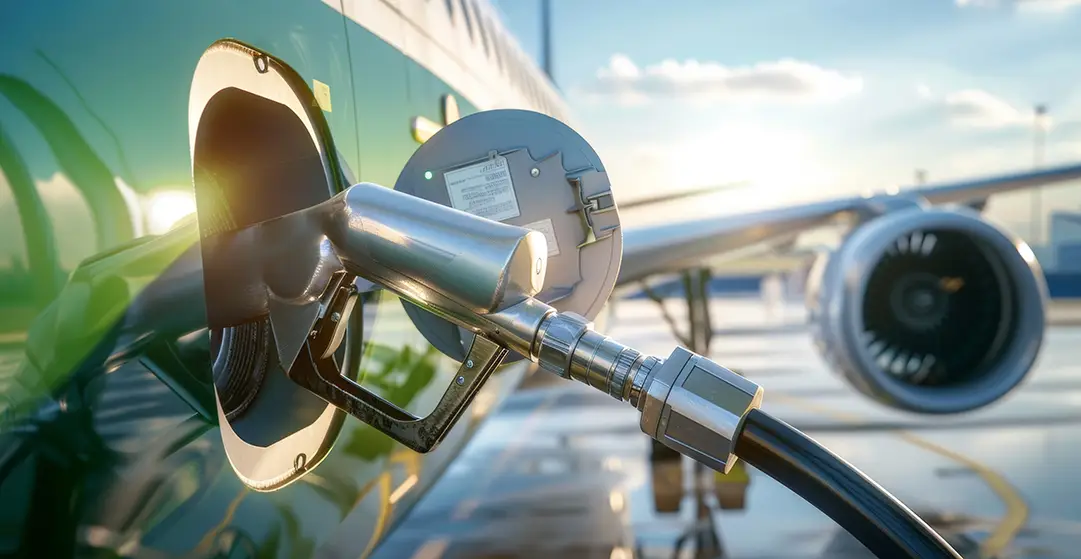

Verifying Sustainability, Traceability, and Lifecycle GHG Emissions Across the Sustainable Aviation Fuel (SAF) Supply Chain
KAN-Accredited V&V Body (LVV-011-IDN) | ISCC Cooperating CB ID180 | ISO/IEC 17029:2019 & ISO 14065:2020
This briefing draws on CBQA Global’s sustainability assurance capabilities, its recognition as an ISCC Cooperating Certification Body, and its direct audit experience with Used Cooking Oil (UCO) Collecting Point operators across Asia.
Executive Summary
International aviation contributes significantly to global connectivity and economic development, but also to greenhouse gas emissions growth. The Carbon Offsetting and Reduction Scheme for International Aviation (CORSIA), established by the International Civil Aviation Organization (ICAO), is the first global market-based scheme applied to an industry sector. It complements in-sector emission reduction measures and allows aircraft operators to reduce their offsetting requirements through the use of eligible fuels that meet approved sustainability and lifecycle emissions criteria.
ISCC CORSIA is an ICAO-recognized certification scheme designed to demonstrate compliance with the sustainability, traceability, and lifecycle assessment requirements applicable to CORSIA Eligible Fuels. Through independent certification, organizations can demonstrate that eligible fuels and their feedstocks meet applicable requirements across the supply chain. As a recognized framework for CORSIA Certification, Sustainable Aviation Fuel Certification, and Aviation Sustainability Certification, ISCC CORSIA supports credible sustainability claims across international aviation fuel markets.
Under the CORSIA framework, CORSIA Eligible Fuels (CEF) include CORSIA Sustainable Aviation Fuels (SAF) and CORSIA Lower Carbon Aviation Fuels (LCAF). This briefing focuses primarily on Sustainable Aviation Fuel (SAF) and the supply chains supporting its production.
Established in 2019, CBQA Global is a private certification, audit, and training body serving industry’s need for quality assurance, qualified auditors, and up-to-date awareness of Indonesia’s applicable regulations. CBQA Global is accredited by the National Accreditation Body of Indonesia (Komite Akreditasi Nasional) under SNI ISO/IEC 17029:2019 and is recognized by APMG International (United Kingdom).
CBQA Global is recognized by ISCC GmbH as a Cooperating Certification Body (ISCC ID180) with scope covering ISCC EU, ISCC Plus, ISCC Japan FIT, ISCC CORSIA, and ISCC CFC. This briefing draws on that accredited scope and on CBQA Global’s direct audit experience with Used Cooking Oil (UCO) collecting-point operators across Asia to explain What is ISCC CORSIA Certification, how ISCC CORSIA works, and what it means for organizations across the SAF Supply Chain.
About ISCC and ISCC CORSIA
ISCC is an internationally recognized, independent multi-stakeholder certification system governed by the legally registered ISCC Association (ISCC e.V.), with certifications conducted by independent third-party Certification Bodies such as CBQA Global. CORSIA allows aircraft operators to account for the emissions benefits of eligible fuels when determining their offsetting requirements. To support this process, the sustainability characteristics, traceability, and lifecycle emissions of those fuels must be demonstrated through an approved certification system.
As demand for Sustainable Aviation Fuel (SAF) continues to increase globally, ISCC CORSIA Certification has become an important mechanism for demonstrating compliance with Sustainable Aviation Fuel certification requirements and international sustainability expectations.
ISCC CORSIA applies across the SAF value chain including feedstock producers, fuel manufacturers, traders, storage facilities, logistics providers, and aviation fuel suppliers.
Independent certification provides assurance that sustainability claims associated with eligible fuels are supported by credible and verifiable evidence. This includes organizations operating throughout the Sustainable Fuel Supply Chain and broader SAF Supply Chain.
Core Requirements
ISCC CORSIA is built on three pillars: sustainability criteria, chain-of-custody and traceability requirements, and Lifecycle GHG Emissions accounting. Certified organizations must demonstrate that feedstocks are sustainably sourced, that environmental risks are managed, and that documentation supports traceability at every step of the supply chain from point of origin to final fuel use.
These requirements form the foundation of CORSIA sustainable aviation fuel certification and support robust Sustainable Aviation Fuel Traceability across the supply chain.
SAF produced from suitable waste, residues, biomass, or other approved feedstocks can deliver a significant lifecycle greenhouse gas reduction compared with conventional jet fuel. Certification and verification under ISCC CORSIA are what makes that reduction claim credible and measurable to regulators, airlines, and end customers.
CBQA Global’s ISCC CORSIA Certification Process
Because the SAF supply chain typically spans several independent actors – collecting points, traders, processing units, and fuel suppliers – CBQA Global’s audits are structured to verify both the individual operator and the chain connecting them.
The ISCC CORSIA Certification Process includes:
• Scope and operator-type verification confirming whether the entity is a point of origin, Collecting Point, trader, processing unit, or fuel supplier, and applying the corresponding ISCC CORSIA requirements.
• Sustainability criteria assessment verifying feedstock origin and confirming material such as waste or residues meets ISCC CORSIA’s eligibility requirements.
• Chain of custody and traceability review checking that documentation links material consistently from point of origin (e.g., restaurants, hotels, canteens) through each intermediate supply-chain actor.
• Mass balance verification reconciling the volumes of sustainable material received, processed, and delivered at each stage of the chain.
• Lifecycle GHG accounting review confirming emissions calculations follow ICAO and ISCC methodology so the resulting reduction claim is defensible.
These checks are conducted in accordance with applicable ISCC requirements and audit procedures, followed by independent review and certification. This process gives actors across the supply chain and ultimately the aircraft operator using the fuel a verifiable basis for supporting their sustainability claims through an independent ISCC CORSIA Audit.
Why CBQA Global
• KAN-accredited Validation & Verification Body (LVV-011-IDN) operating under SNI ISO/IEC 17029:2019 and ISO 14065:2020.
• ISCC Cooperating ISCC CORSIA Certification Body (ID180) with scope spanning ISCC EU, ISCC Plus, ISCC Japan FIT, ISCC CORSIA, and ISCC CFC giving clients a single, multi-scheme audit partner.
• Direct audit experience with Collecting Point operators handling Used Cooking Oil across multiple Asian markets, in addition to traders and processing units further down the SAF supply chain.
• A multidisciplinary team experienced across GHG verification, chain-of-custody auditing, and the practical realities of waste-based feedstock supply chains.
Related Article : ISCC Carbon Footprint Certification (ISCC CFC)
Client Success Story
CBQA Global’s ISCC CORSIA clients operate across several markets in Asia, including Malaysia, Taiwan, and Indonesia. Most are Collecting Point operators handling Used Cooking Oil (UCO) of entirely vegetable origin, with material collected from points of origin such as restaurants, hotels, and canteens.
These clients supply certified material to subsequent actors in the value chain, including traders and processing units, where it may undergo further processing before contributing to the production of Sustainable Aviation Fuel (SAF). The end users of that SAF are aviation operators worldwide, who rely on the ISCC CORSIA certification system to substantiate their greenhouse gas emission reductions under CORSIA.
CBQA Global’s role at the Collecting Point stage is to verify that feedstock origin, documentation, and mass balance are sound from the very first step of the chain work that underpins the credibility of every sustainability claim made further downstream, all the way to the aircraft.
Benefits of ISCC CORSIA Certification
Access to Global Aviation Fuel Markets
Demonstrates compliance with internationally recognized sustainability requirements applicable to CORSIA Eligible Fuels.
Verified Supply Chain Traceability
Strengthens the credibility of sustainability claims through documented and auditable material flows while supporting Sustainable Aviation Fuel Traceability.
Credible Lifecycle Emissions Data
Provides a structured basis for calculating, reporting, and verifying Lifecycle GHG Emissions.
Stronger Stakeholder Confidence
Supports transparent communication with customers, aviation operators, regulators, and other stakeholders across the value chain.
Implementation Challenges and Future Outlook
Organizations across the SAF supply chain may face practical challenges in maintaining reliable source documentation, managing traceability across multiple suppliers, reconciling mass balance records, and collecting accurate data for Lifecycle GHG Emissions calculations. Addressing these challenges requires consistent internal controls and close coordination between actors across the supply chain — from points of origin and Collecting Points to traders, processing units, and fuel suppliers.
As these requirements become increasingly important across international aviation fuel markets, organizations will need stronger systems for demonstrating the origin, traceability, and emissions performance of sustainable fuels. Global commitments to net-zero aviation by 2050 are expected to increase demand for SAF and, with it, for credible sustainability certification. ISCC CORSIA is likely to remain a key mechanism for validating fuel sustainability and supporting the sector’s decarbonization efforts.
Conclusion
ISCC CORSIA Certification supports the credibility of the SAF value chain by providing a recognized framework for sustainability, Sustainable Aviation Fuel Traceability, and Lifecycle GHG Emissions assessment.
For organizations operating across this value chain, effective certification begins with understanding their role, establishing reliable traceability controls, and demonstrating compliance with the requirements applicable to their activities. With experience across sustainability assurance and ISCC Certification for SAF, CBQA Global supports organizations in navigating this process and strengthening their participation in certified sustainable fuel supply chains.
Get in Touch
Preparing for ISCC CORSIA Certification?
Whether your organization operates as a Collecting Point, trader, processing unit, fuel producer, or other participant in the sustainable aviation fuel supply chain, understanding your certification scope is the first step.
Whether you are exploring How to get ISCC CORSIA Certification, evaluating Who needs ISCC CORSIA Certification, or assessing ISCC CORSIA Certification Indonesia requirements, CBQA Global’s Sustainability team is ready to help.
Speak with CBQA Global’s Sustainability team to assess your organization’s position in the supply chain and identify the applicable certification requirements.
As an approved ISCC CORSIA Certification Body, CBQA Global provides Sustainable Aviation Fuel Certification Services and independent certification support for organizations operating across the global SAF value chain.
Email : marketing@cbqaglobal.com
WhatsApp : 08118468777