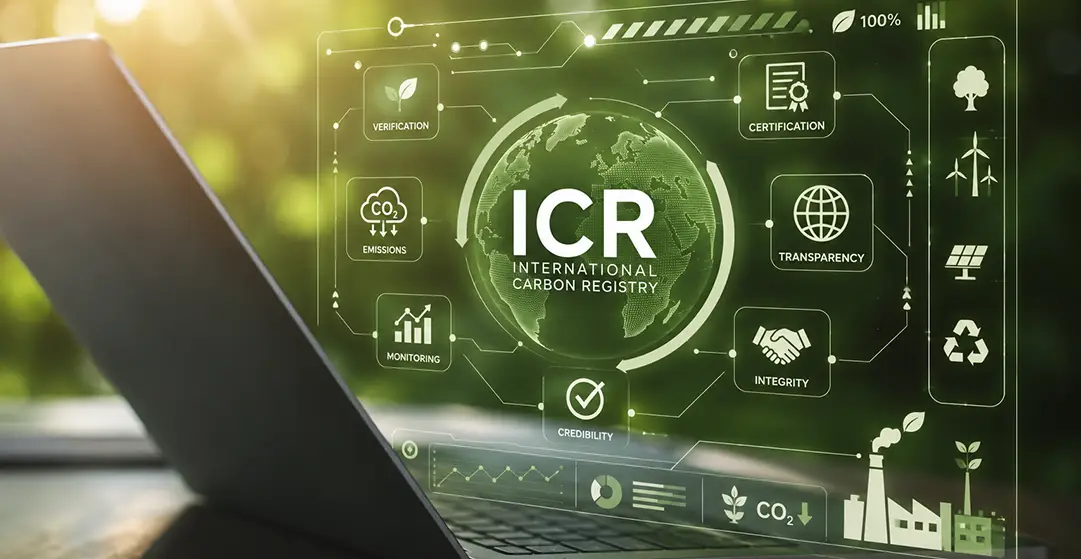
International Carbon Registry (ICR) has introduced a new integrity framework to enhance transparency and provide a clearer understanding of risk in the carbon market.
Under this framework, every registered project will receive an independent MSCI Carbon Project Rating and Kita Risk Assessment, with an option for insurance coverage.
According to ICR, this approach is the first of its kind in the carbon market because it integrates independent third-party assessment and risk assessment into the project registration process.
The objective is to make project quality and risk easier to understand from the outset, enabling buyers to evaluate carbon credits in a more structured manner.
Why Is Independent Assessment Important in the Carbon Market?
Buyers of carbon credits generally conduct their own due diligence before selecting a project. According to ICR, this can result in different assessment approaches and affect confidence in the carbon market.
The new ICR framework incorporates independent assessment into the registration process. This process continues to be supported by carbon project validation and verification conducted by accredited independent bodies.
As a result, information on project quality and risk can be made available from the outset.
What Does the New Framework Mean for Projects and Buyers?
For project developers, information on quality and risk can help communicate the project profile to investors, financial institutions, and commercial stakeholders.
For buyers and investors, a carbon project rating provides information on project quality based on methodology and location. Meanwhile, a carbon credit risk assessment provides insight into delivery, performance, and permanence risks.
This information can support procurement, portfolio management, and risk evaluation.
How Does ICR Build Its Integrity Stack?
The ICR framework consists of three main layers:
1. Third-Party Validation and Verification
Accredited Validation and Verification Bodies (VVBs) independently validate and verify projects against applicable requirements.
Carbon project validation and carbon project verification form the foundation of project registration and credit issuance within ICR.
2. MSCI Carbon Project Rating
Every iCR project receives an MSCI Carbon Project Rating based on a standardized approach.
The rating covers:
- Additionality
- Permanence
- Implementation quality
The rating provides an independent indicator of carbon project quality.
3. Risk Assessment
Risk Assessment evaluates project risks using an approach oriented toward financial requirements.
The assessment covers delivery, performance, and permanence risks. Projects also have the option to obtain insurance coverage.
According to ICR, verifiers, rating providers, and risk assessors remain independent. This separation maintains a clear distinction between registry governance and project evaluation.
How Does the Framework Strengthen Carbon Market Transparency?
Validation and verification establish project conformity with applicable requirements. Ratings provide an additional perspective on project quality, while risk assessment helps provide a better understanding of credit delivery and permanence risks.
Together, these three layers provide more transparent information about carbon credits.
The framework also operates alongside the ICR assurance system, including independent validation and verification by VVBs accredited to ISO 14065, quality oversight, as well as conformity and procedural reviews.
CarbonRegistry.com also uses blockchain technology to support traceability, data access, and transparency throughout the credit lifecycle, from project design through retirement.
How Does This Approach Support a More Transparent Carbon Market?
The collaboration between ICR, MSCI, and Kita combines independent carbon project ratings and risk information within the registry infrastructure.
According to ICR, this approach is designed to simplify carbon credit evaluation for both project developers and buyers.
With more consistent information on project quality and risk, carbon market participants have a clearer basis for understanding the projects and credits available.
How Does CBQA Global Support Sustainability Needs?
The development of the carbon market means organizations need to understand various aspects of projects, data, validation, verification, and sustainability claims.
CBQA Global provides Certification, Audit, Training, and Sustainability services, including GHG Verification, GHG Project Validation & Verification, and Carbon & Climate Solutions.
For organizations preparing carbon projects or requiring carbon project validation and verification, CBQA Global can support relevant assessment needs and sustainability services.
Discuss your organization’s requirements with CBQA Global.
Email: info@cbqaglobal.com
WhatsApp: 08118468777
Phone: +62 21 2781 4200
CBQA Global. We Inspire in Trust
Certification | Audit | Training | Sustainability