
ISO 14064-2: Measuring Emission Reductions from Mitigation Actions
After an organization knows how much GHG emissions it generates, the next question is: “How much emissions have we successfully reduced through an action or project?” This question takes us from emissions management at the organizational level to managing emission reductions at the project or mitigation action level. This is where ISO 14064-2 plays an […]
Threat and Vulnerability Risk Assessment (TVRA): What Financial Institutions Need to Know?
Financial Institutions are increasingly dependent on technology to deliver services and support daily operations. Therefore, technology risk management plays an important role in maintaining resilience and service continuity. Under the Technology Risk Management Guidelines (January 2021), the Monetary Authority of Singapore (MAS) provides principles and practices to help Financial Institutions establish technology risk governance and […]
What Is TVRA? Understanding Threat and Vulnerability Risk Assessment for Data Centres
Data Centres are critical infrastructure for organizations that rely on technology-based services. Any disruption to facilities, infrastructure, or supporting systems can affect service availability and business operations. One approach outlined in the Monetary Authority of Singapore (MAS) Technology Risk Management Guidelines is Threat and Vulnerability Risk Assessment (TVRA). In the context of Data Centres, TVRA […]
Benefits of ISO/IEC 42001 for Companies and Applicable Sectors
The use of Artificial Intelligence (AI) continues to grow across business activities. Therefore, organizations need a structured approach to manage AI-related risks, responsibilities, and opportunities. ISO/IEC 42001:2023 provides an Artificial Intelligence Management System (AIMS) framework to help organizations manage AI in a structured way. It covers key areas such as AI governance, AI risk management, […]
ISO 42001: Definition, Purpose, Benefits, and Implementation
The use of Artificial Intelligence (AI) is expanding across business processes, from automation to decision-making. However, AI also creates risks related to data, transparency, accountability, security, and governance. Organizations therefore need a structured approach to manage these risks and opportunities. ISO/IEC 42001 provides an Artificial Intelligence Management System (AIMS) framework that helps organizations manage AI […]
PCI DSS Compliance : Requirements, Assessment Process, and How to Prepare

PCI DSS compliance requires organizations to meet and validate the requirements of the Payment Card Industry Data Security Standard (PCI DSS) to protect payment account data. PCI DSS provides a baseline of technical and operational requirements for organizations that store, process, or transmit payment data. It also applies to entities that can impact the security […]
What Is PCI DSS? Definition, Objectives, and Benefits for Companies
Every organization that accepts, processes, stores, or transmits payment card data must protect that data. The global standard for payment account data protection is PCI DSS, or Payment Card Industry Data Security Standard. The PCI Security Standards Council (PCI SSC) develops and maintains this standard. What Is PCI DSS? According to the PCI Security Standards […]
PTBAE-PU: Managing Emissions through Emission Caps and Carbon Trading
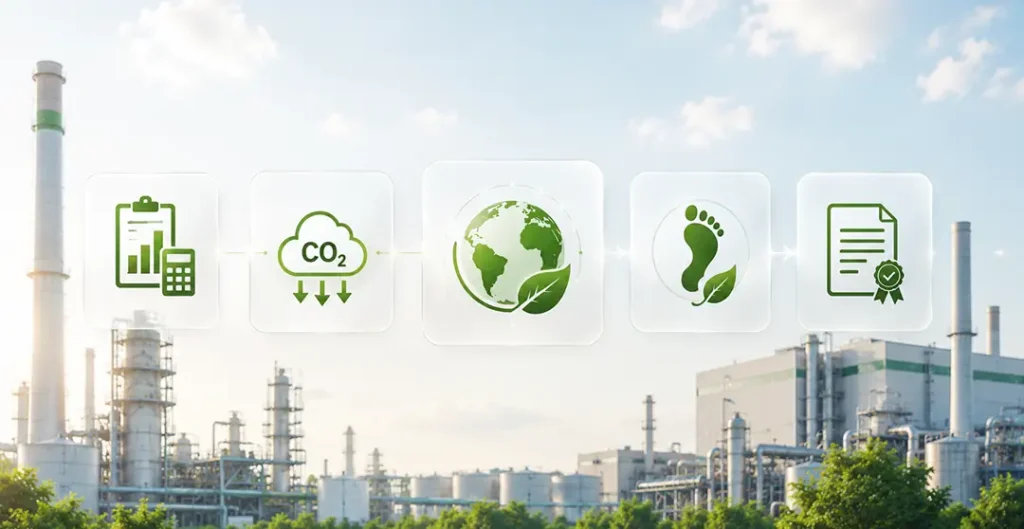
Climate change encourages governments and businesses to not only measure Greenhouse Gas (GHG) Emissions, but also control the amount of emissions generated by business activities. In Indonesia, one of the instruments under the Carbon Economic Value (NEK) framework is the Technical Approval for Emission Caps for Business Actors (PTBAE-PU). PTBAE-PU establishes an emission cap for […]
Greenhouse Gases : Understanding GHG Emissions, Carbon Footprint, and Emission Reduction Strategies
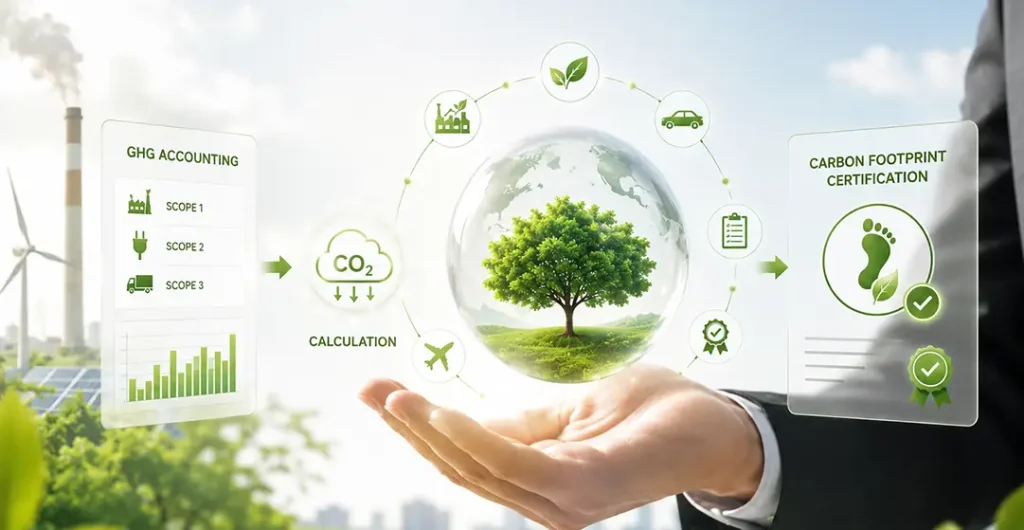
Climate change is increasingly driving organizations to understand and manage their environmental impact. As a result, GHG emissions have become an important part of sustainability management. For companies, managing GHG emissions involves more than calculating the amount of emissions they generate. Instead, emissions data can help organizations develop reduction strategies, improve operational efficiency, meet customer […]
SOC 2 Type 1 vs Type 2: Understanding the Differences and How to Choose
Executive SummarySOC 2 Type 1 vs Type 2 Understanding the Difference, Evidence, Operating Effectiveness & Readiness 1. Executive Overview SOC 2 Type 1 and Type 2 are both part of a SOC 2 examination based on the AICPA Trust Services Criteria. The main difference lies in the timing of the evaluation and the depth of […]